Unsigned inspection lines, review periods, referrals, invoices, and files that stop at the edge of the next office.
ORIGINAL FEATURE SCREENPLAY · CIVIC SCREWBALL NOIR · ENVIRONMENTAL PROCEDURAL
CASE 1638:
RECALL
After a joke candidacy makes a conspiracy-theorist podcaster mayor by forty-three votes, a jar of brown tap water leads him to an energy company’s buried contamination, and he must separate evidence from obsession before he destroys the case and everyone helping him.
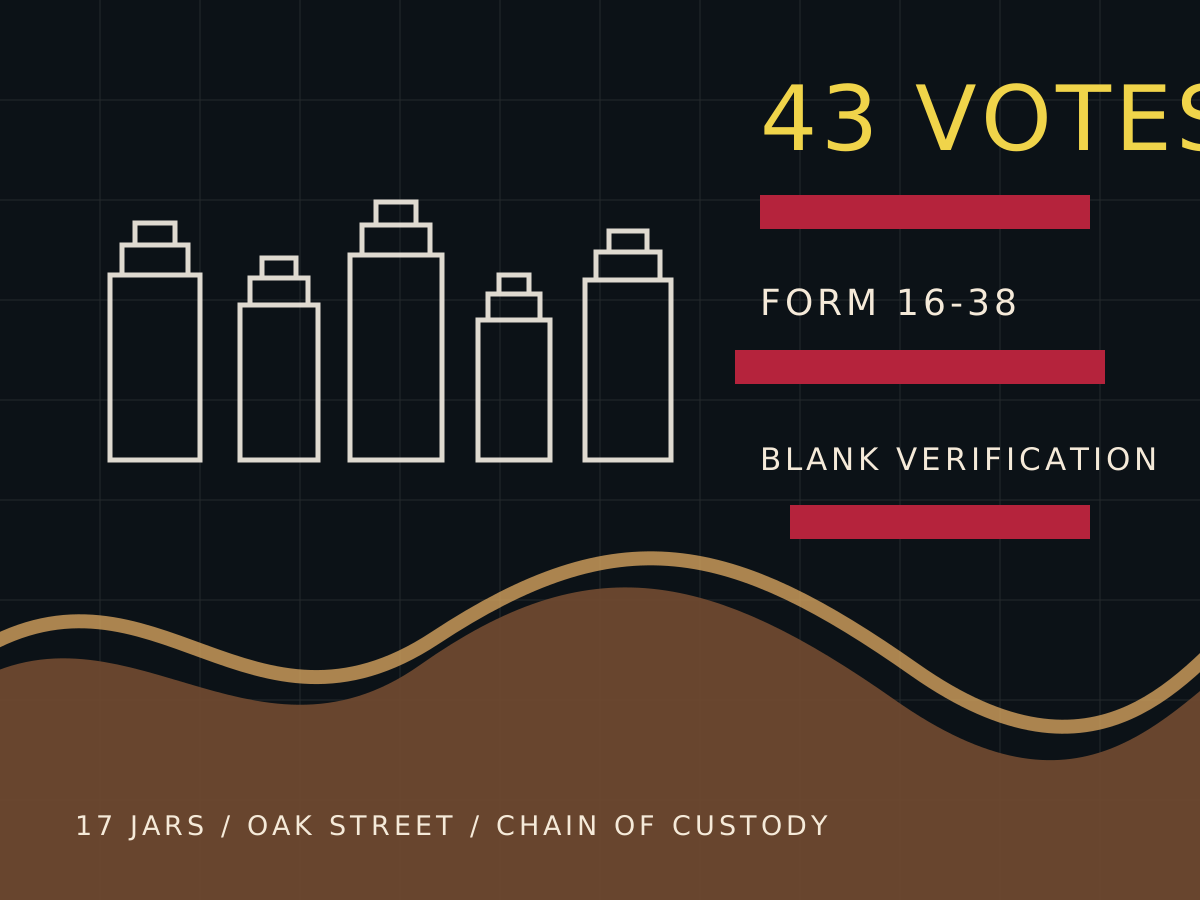
CASE 163843 VOTESBROWN WATERBLANK VERIFICATIONCHAIN OF CUSTODY
This work inherits the orbit: a joke election, buried contamination, and records held in separate offices become one public case.
PROFESSIONAL FILE
The award-winning screenplay.
The professional file concerns the original 113-page screenplay judged and awarded First Place by Scriptapalooza.
- Form
- Original feature screenplay
- Length
- 113 screenplay pages
- Genre
- Civic screwball noir · environmental procedural
- Status
- Complete · unproduced
- Recognition
- First Place · 2026 Scriptapalooza Screenplay Competition
- Materials
- Logline · synopsis · public sample · screenplay · author statement · one-sheet
- Rights inquiry
- Representation · option · production · adaptation
THE HUMAN CENTER
The water is brown.
The record is clean.
Gil drinks what the town has learned not to see. Dolores, Rosa, Miguel, and the residents of Aguaverde hold pieces of a history no single witness can prove alone.
The film begins with a glass, not a thesis. Its central conflict is not whether Gil suspects a conspiracy. It is whether damaged credibility, separated files, municipal procedure, laboratory evidence, public money, and community memory can become a record strong enough to survive him.
Gil is often directionally right and procedurally dangerous. The screenplay distinguishes pattern from proof while refusing the opposite fiction: that a failure to assemble proof means no harm occurred.
Gil can be right about Rayborn and still owe Mateo an apology, work, and repair. The screenplay does not allow public truth to erase personal responsibility.
OPENING IMAGE
A copy of a copy.
A glass like evidence.
MONOCHROME. Hard. Digital. High-contrast.

We are tight on a STATE INQUIRY MONITOR, too close to see the room around it. Burned into the image: “AGUAVERDE WATER INVESTIGATION / EXHIBIT VIDEO 12 / SOURCE: KEEPING TRACK LIVE FEED.”

A COPY OF A COPY. Time code crawling in one corner.

INT. GIL’S TRAILER - NIGHT - EVIDENTIARY VIDEO

A hand reaches for a glass.

BROWN WATER. Sediment turning slowly in the desk-lamp light.

The hand lifts the glass. Tips it. DRINKS. Brown water down a chin we have not seen yet.

The glass comes down. CLINKS against a desk like evidence.

                         GIL (V.O.)
              Now you know what it tastes like.

BLACK.
THE DIVIDED RECORD
Every office has a piece.
No office has the whole.
Mason jars, household samples, medical patterns, maintenance logs, and memories preserved long enough to be compared.
43
The conspiracy is not a secret meeting. It is a structure of separation. One office keeps the invoice, another the test result, another the claim denial, and each can say its own drawer is incomplete. Gil must assemble the chain without mistaking pattern for proof.
“Bring the jars.”
“Now you know what it tastes like.”
Seventeen labeled jars. Addresses, dates, times, and shades of brown.
“Drink it.”
“The water is poisoned. The paperwork is perfect.”CASE 1638: RECALL · official promotional line for the 113-page competition screenplay
THE DRAMATIC ENGINE
The community
becomes the argument.
Evidence versus pattern
Gil’s intuition generates inquiry. It does not receive the screenplay’s permission to substitute for proof.
Separated custody
Invoices, test results, claim denials, maps, minutes, and memories remain locally defensible because no office holds the whole.
Comedy under pressure
Screwball velocity and civic absurdity reveal institutional design without trivializing contaminated water or damaged lives.
Aftermath, not triumph
The water can become clean without making the past clean. The case advances while losses remain unrepaired.
TWO FORMS · ONE STORY
Public collision.
Private remainder.
Compression, collision, proof
The film form keeps the argument public: dialogue, physical evidence, procedural reversals, visual absence, comic timing, and a community forced to construct a record while harm continues.
Interiority, history, remainder
The literary adaptation expands the lives behind the documents: medical and maintenance histories, prior complaints, interior narration, documentary fragments, and the moral difference between belief and proof.
REPRESENTATION · PRODUCTION · ADAPTATION
Request the screenplay
or the novel-development file.
The screenplay, synopsis, author statement, award verification, novel-development materials, and related CASE 1638 work are available for qualified industry review.