TWO INDEPENDENT NOVEL CYCLES · LIANA MARIE SIVE
The Schattendorf
Echoes
Hermann opens her house. Julia wants her own future. Alistair claims their story. Austria’s crises of 1927–1934 put their shared life under increasing pressure.
The German cycle and its English translation. Lord Alistair’s independent English cycle. Both written by Liana Marie Sive.
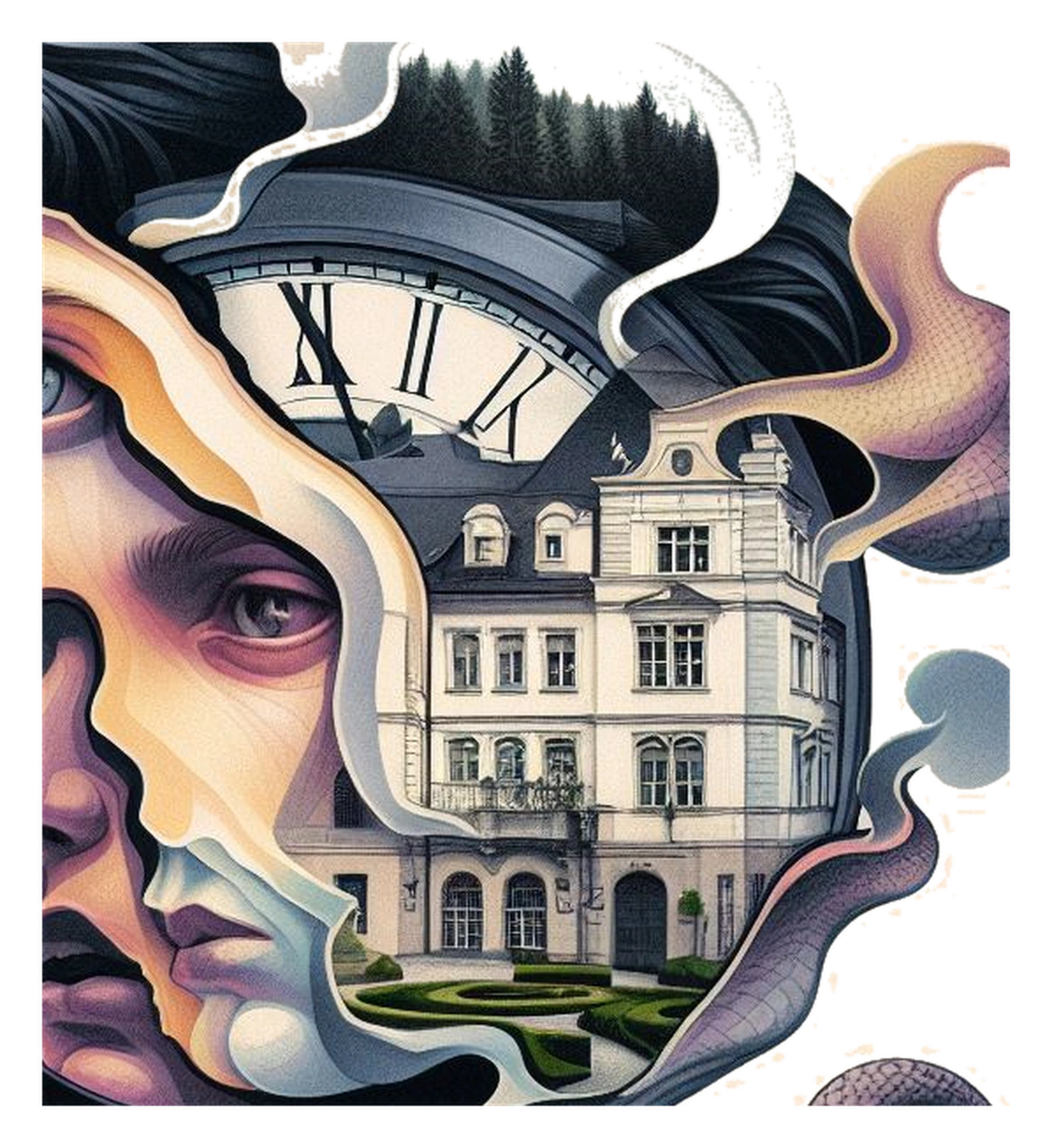
History enters a house whose inhabitants have plans of their own.
TWO SERIES · THREE PRESENT READING OPTIONS
A translation carries a cycle.
Alistair creates another.
Each cycle can be read independently. Each comprises a Prelude, three novels, and a Postlude.
01 · THE AUSTRIAN GERMAN CYCLE
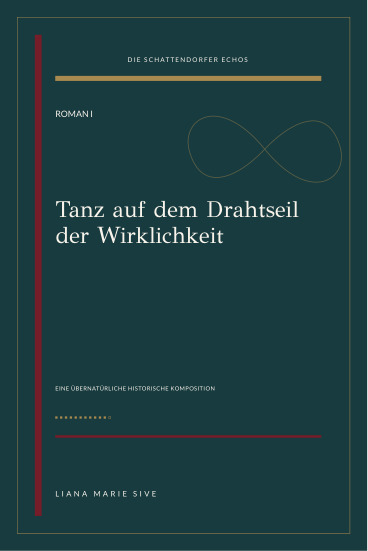
Die Schattendorfer Echos
Hermann opens an inherited house to people whose work, affections, and disagreements exceed her own design. The cycle asks how different lives can act together against fascism while retaining the power to question those who act for them.
Available in German and in English translation. The English translation belongs to this cycle.
02 · LORD ALISTAIR’S ENGLISH CYCLE
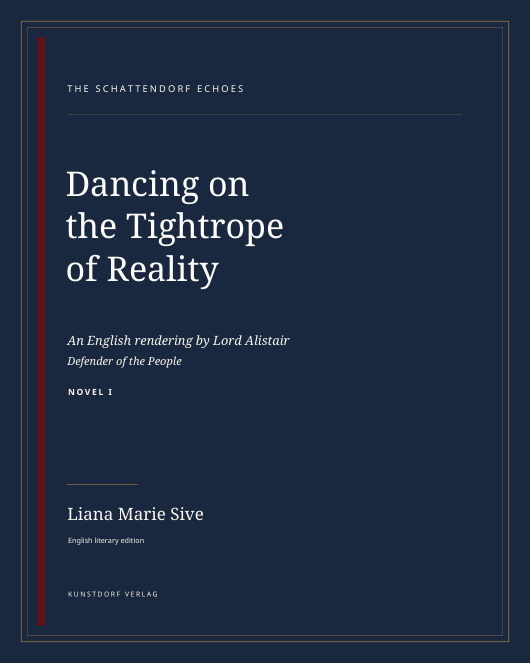
The Schattendorf Echoes
Alistair knows a great deal about the household and enjoys telling us. His intelligence, humor, and access make his company attractive. His account asks what happens when that understanding becomes a claim to command the people whose lives he reveals.
Available in English. A German literary version is planned and not yet available. “An English rendering by Lord Alistair” is part of Sive’s fictional construction.
FOR AGENTS, PUBLISHERS, & READERS
Two complete cycles.
Clear reading routes.
Begin with Novel I of either cycle, or compare their openings in the public sampler.
- Form
- Two independent five-volume cycles: Prelude · Novel I · Novel II · Novel III · Postlude
- Genre
- Supernatural historical fiction · Austria, 1927
- Author
- Liana Marie Sive
- Languages
- German cycle: German and English translation
Alistair cycle: English; German version planned, not yet available - Reader materials
- Public samples · private complete manuscripts · companions · concordances · comparative essays
- Professional inquiries
- Representation · publication · translation · audio · screen/stage adaptation
THE HUMAN CENTER
A house full
of other lives.
Hermann von Kunstdorf wants to paint, love, and open her inherited house to the village. She is a transgender woman; Julia calls her Papa. Julia’s writing and future have purposes of their own.
Frau Klemper has meals to get ready. Children ask questions, artists disagree, paintings can be entered, and the dead join the conversation. Humor and ordinary work give the household a life beyond anyone’s political or artistic explanation of it.
The people inhabit both cycles, but the difference reaches beyond voice. A warning can alter a plan; additional knowledge can expose help deliberately withheld. What happens, what can be known, and who bears responsibility may change together.
Explore the differences and purposesNOVEL I · DANCING ON THE TIGHTROPE OF REALITY
The same newspaper.
A different authority.
The German cycle in English translation
Adornfeld brought the paper in before the coffee had settled. He did not wave it. He placed it beneath two estate letters and a bill for lamp oil, as if bad news could be disciplined by being filed under domestic expense.
Novel I · page 11
Continue the English translationAlistair’s independent English account
The first public accusation entered my house under a bill for lamp oil. Adornfeld carried two estate letters above it and set the whole bundle beside the coffee. For a moment I had the satisfaction of seeing the household arranged as I had left it: what concerned everyone below what concerned the proprietor, with the price of illumination between.
Novel I · page 12
Continue Alistair’s accountThe first passage follows a household action. The second makes its arrangement a proprietor’s pleasure. Alistair’s voice changes the reader’s position within the scene.
POLITICS, MUSICAL FORM, & THOMAS MANN
How a story gives
someone power.
Two anti-fascist undertakings
The two tellings let a reader compare knowledge with authority. Their historical Interval gives work, affection, comedy, and art time before catastrophe. Musical form makes competing claims on attention; the attraction of protection and cultural authority makes freedom to refuse a dramatic problem.
Dialogic Pragmatism grew from Sive’s work on the original cycle. It asks what lets people investigate, decide, and protect one another while those affected can demand answers and alter what happens next. Hermann’s conduct can fail that test. Read how the inquiry developed.
Fascism then and nowTwelve-Tone Writing and the larger fugue
Two small fugues use exact twelve-note procedures; larger recurrences let objects, words, voices, and documents change their uses. The Prelude and Postlude return the editors to the lives their arrangements affect. The piano example shows how musical knowledge becomes a choice about helping.
In Mann’s Doktor Faustus, Zeitblom imagines an English-language destination for his manuscript while doubting the translatability of certain passages. Alistair’s claimed “rendering” makes transmission an interested participant’s act.
Alistair and Doktor Faustus
Musical form and literary construction1927–2027 · THE CENTENARY & THE LARGER PROJECT
Fiction within
a lifetime of research.
Schattendorf is a village in Burgenland on the border with Hungary. The killings there on January 30, 1927, and the Palace of Justice fire in Vienna on July 15 reach their centenary in 2027. These novels were written to offer a new way of looking at the events and their aftermath through imagined lives, conflicting voices, and musical form.
The larger undertaking has occupied Sive for more than a decade. Its roots reach back to her 1984 undergraduate thesis, July 15, 1927: The Cannae of Austrian Freedom.
Read the historical foundationThe project encompasses the Franz Marc biography, a documentary history of Schattendorf, reconstruction of the trial transcript, and an archival website in development: 1,024 investigation and trial images with English translations and renderings in contemporary German, alongside a newspaper archive.
The dedicated Schattendorf website develops these four contributions through paired passages, musical examples, the historical Interval, and readings of authority and refusal. Its companions and concordances support independent reading and comparison. Read the literary case and its examples.
Explore the complete Schattendorf projectREAD THE NOVELS · EXPLORE THEIR WORLD
Choose a cycle.
Follow a question.
Public samples and essays are open to everyone. Complete books are available to authorized readers in the Private Reader.
The project and its editions
The Schattendorf Echoes names the whole project. When an individual English cycle is meant, the fuller label is The Schattendorf Echoes—Lord Alistair’s Rendering. Die Schattendorfer Echos is the Austrian-German cycle. Its English translation is a third reading edition, distinct from Alistair’s account.