ONE WAY INTO THE BODY OF WORK

The Writing

Love, history, power, faith, comedy, memory, art, and the limits of explanation.

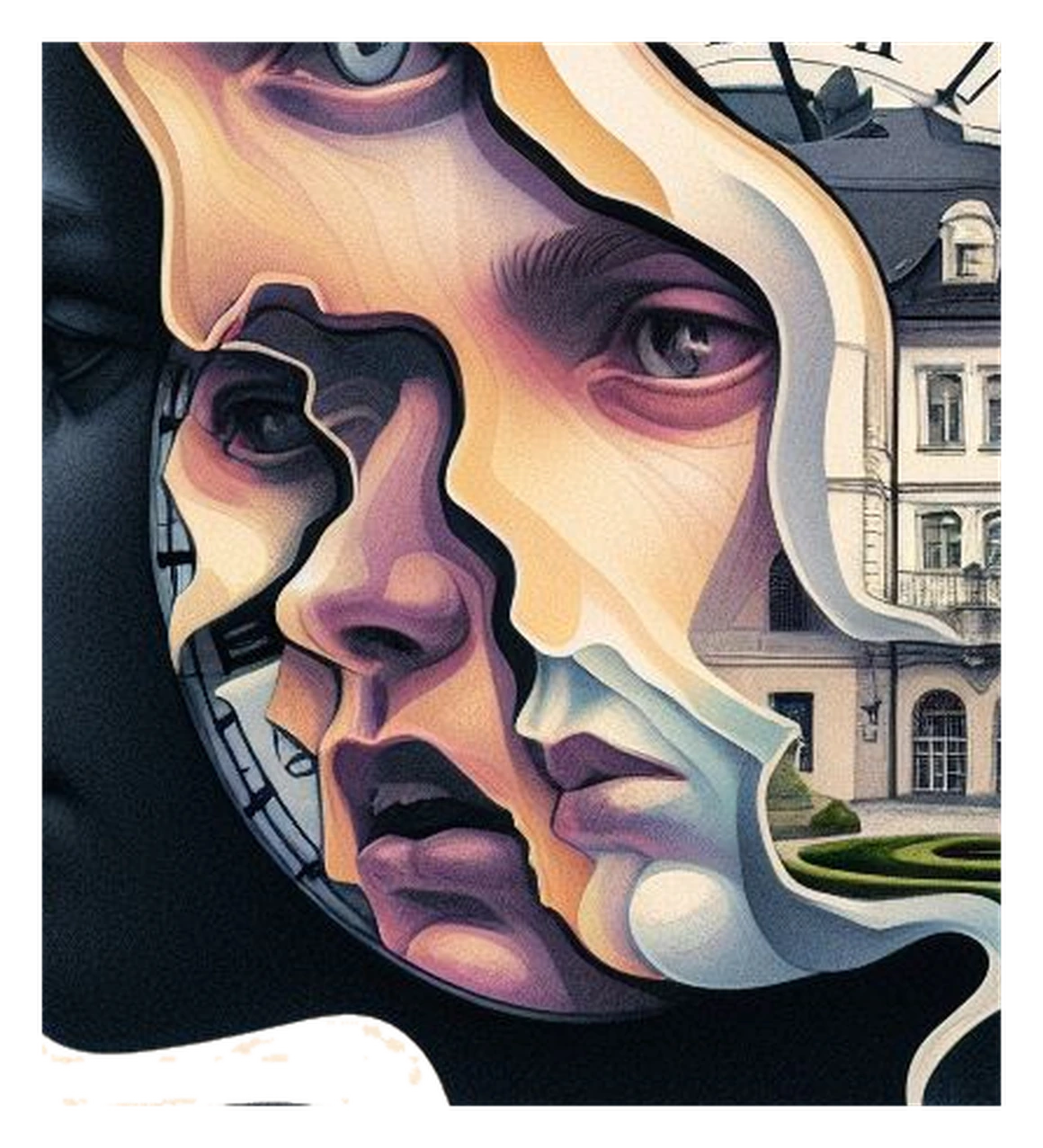
A fractured portion of the SIVE.BIO many-faced portrait.

The account may be complete. The person within it is not.

A recurring question, not an answer key

Across novels, screenplays, drama, history, and criticism, Sive often begins where an explanation appears sufficient. A judgment has been entered. A calculation has found the optimum. An archive has established the record. An investigation has proved its case. A sacred story has disclosed a meaning.

Then another claim remains. A wife must still be recognized. A daughter still has a future. A worker still bears a cost. A family must live in the rooms history has filled. This is one strong route through the writing, but it does not exhaust it.

01 · LOVE / FAMILY

People trying to remain connected.

Wondrous Travels gives philosophical satire the urgency of a marriage: Lin Reyes searches for Nisha while successive systems try to describe, preserve, optimize, or translate their relation. In The Schattendorf Echoes, Hermann's responsibilities to history are continually tested against Julia's right to a life that is not merely the completion of her mother's project.

Family, desire, domestic intimacy, estrangement, dependence, and ordinary attachment matter here because a theory of the person eventually has to survive contact with another person.

02 · TRUTH / JUDGMENT

Being right does not settle every account.

CASE 1638: RECALL allows Gil to uncover real wrongdoing without granting him retrospective innocence in his treatment of Mateo. Double or Nothing permits Beauregard Bottomley to answer correctly while the consequences of victory escape the contest that measured him.

A reading that recurs across these works is that truth remains necessary while responsibility remains independently binding. The existence of one does not automatically cancel the other.

03 · HISTORY / FAITH

What remains active after a record closes?

In Schattendorf, historical violence survives through rooms, objects, artistic ambitions, public accounts, family memory, and the demands of the dead. The supernatural gives persistence a dramatic body without pretending that remembrance itself repairs what happened.

The theological writing extends the question through sacrifice, providence, lament, forgiveness, redemption, protest, and interpretation. The Unnamed Daughter asks how an inherited account changes when attention remains with the person whose suffering has supplied meaning for somebody else's destiny.

04 · DESCRIPTION / POWER

Descriptions can become actions.

Classification, price, jurisdiction, archive, evidence, optimization, doctrinal authority, and official language recur because the power to describe can become the power to decide what happens next. Wondrous Travels turns that pressure into speculative nations. The CASE 1638 works compress it into files, procedures, calculations, and recursive investigation.

The systems are often most dangerous when they are not lying. Their categories may be accurate and still fail to preserve the scale at which a life is actually lived.

05 · SATIRE / COMEDY

Reasonable rules, faithfully administered.

A recurring comic mechanism begins with something that sounds almost reasonable and lets an institution administer it past the point at which ordinary judgment would stop. A vote total becomes destiny. A correction becomes another jurisdictional problem. A quiz game's success produces costs outside the game.

And in The First Fault-Line, literary history itself is classified into Before Sive and After Sive. The joke then escapes the novel and acquires an Academy, a committee address, a librarian, a locked door, and its own paperwork.

06 · ART / MUSIC / FORM

Form changes the experience, not just the argument.

Music, painting, recurring voices, numerical structures, theatrical illumination, cinematic sound, bilingual pressure, and recursive documents are not decorations around the stories. They alter what a reader or audience is made to notice and how long competing claims can remain present together.

Yet art is not innocent merely because it is beautiful. These works repeatedly ask whether form coordinates, possesses, transmits, consoles, overwhelms, or makes room. Sometimes the answer is simply a score passed to another person, a room left usable, or a book opened because someone wants to hear it again.

NOT ONE THESIS
The writing can carry obligation without making every pleasure answer for itself.

Comedy, curiosity, sensual and domestic life, embarrassment, beauty, music, making, boredom, tenderness, and play are part of the field too. The overview is an invitation to notice patterns, then return authority to the work.